Events Are a Poorly Solved Coordination Problem
A new model for events (2-minute overview)
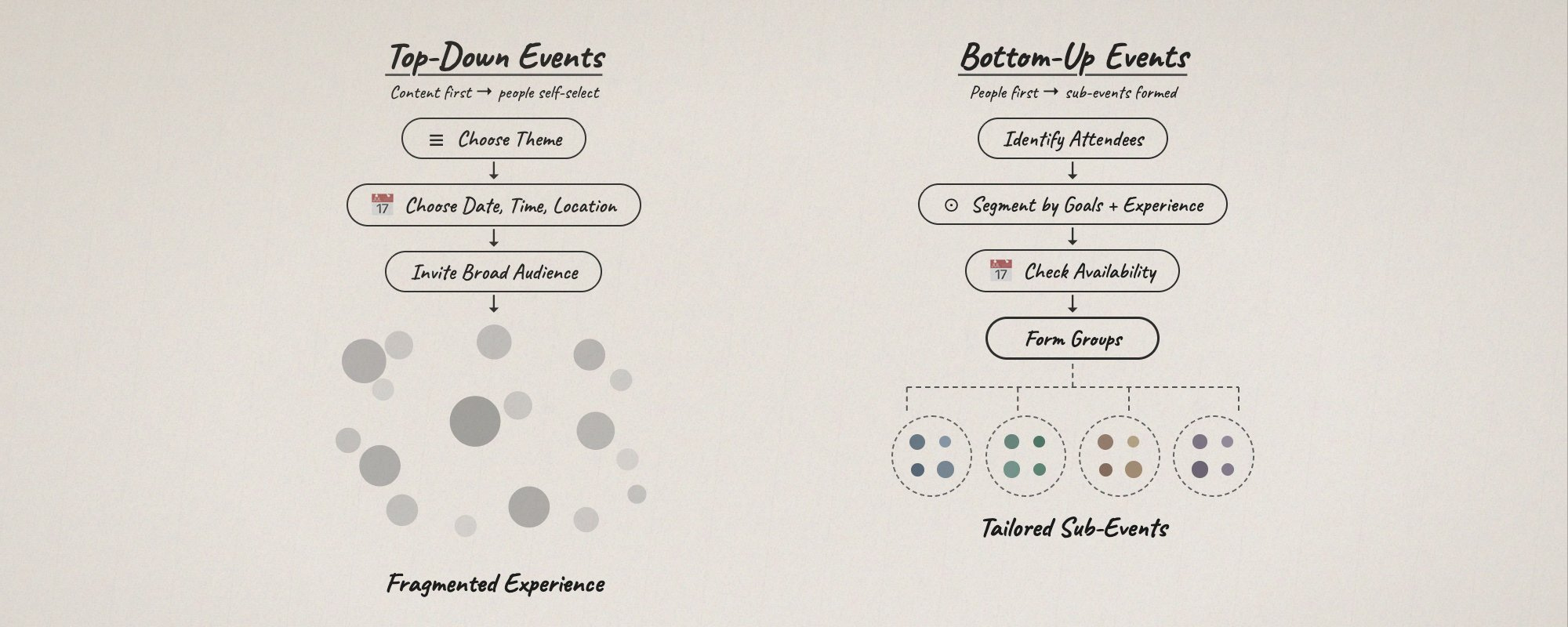
The deepest issues with modern events is that they are, by definition, top-down. Event organizers must say: "We're having an event at this time" and then attendees must say: "Looks great, I'll go."
This is just how events operate in our current world, so on the surface, it seems like nothing is wrong.
To illustrate the issue though, imagine inviting 100 people to an event: "AI for B2B Community Builders".
- First → 50% of the potential attendees aren't available.
- Second → There's differing levels of experience in the topic (some are experts, others are just starting).
- Third → In each level of experience, there are other segments like reason to attend (e.g. using AI for engagement, deeper analytics, etc.)
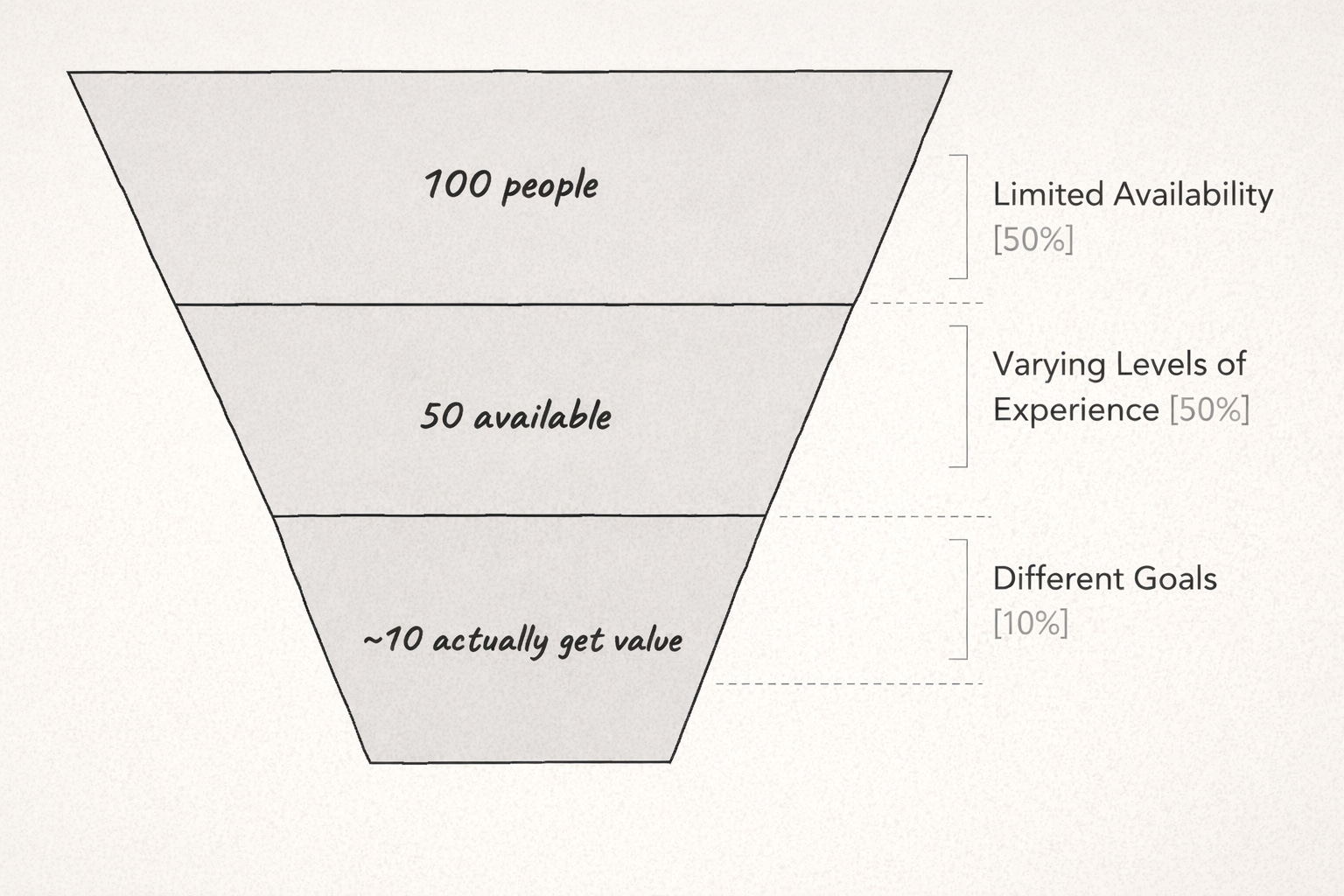
We end up with a fragmented group, so it's impossible to create a valuable experience for more than a handful of people.
A bottom up approach starts with nuanced segments of attendees, their goals, and availability… and then crafts sub-events around those people.
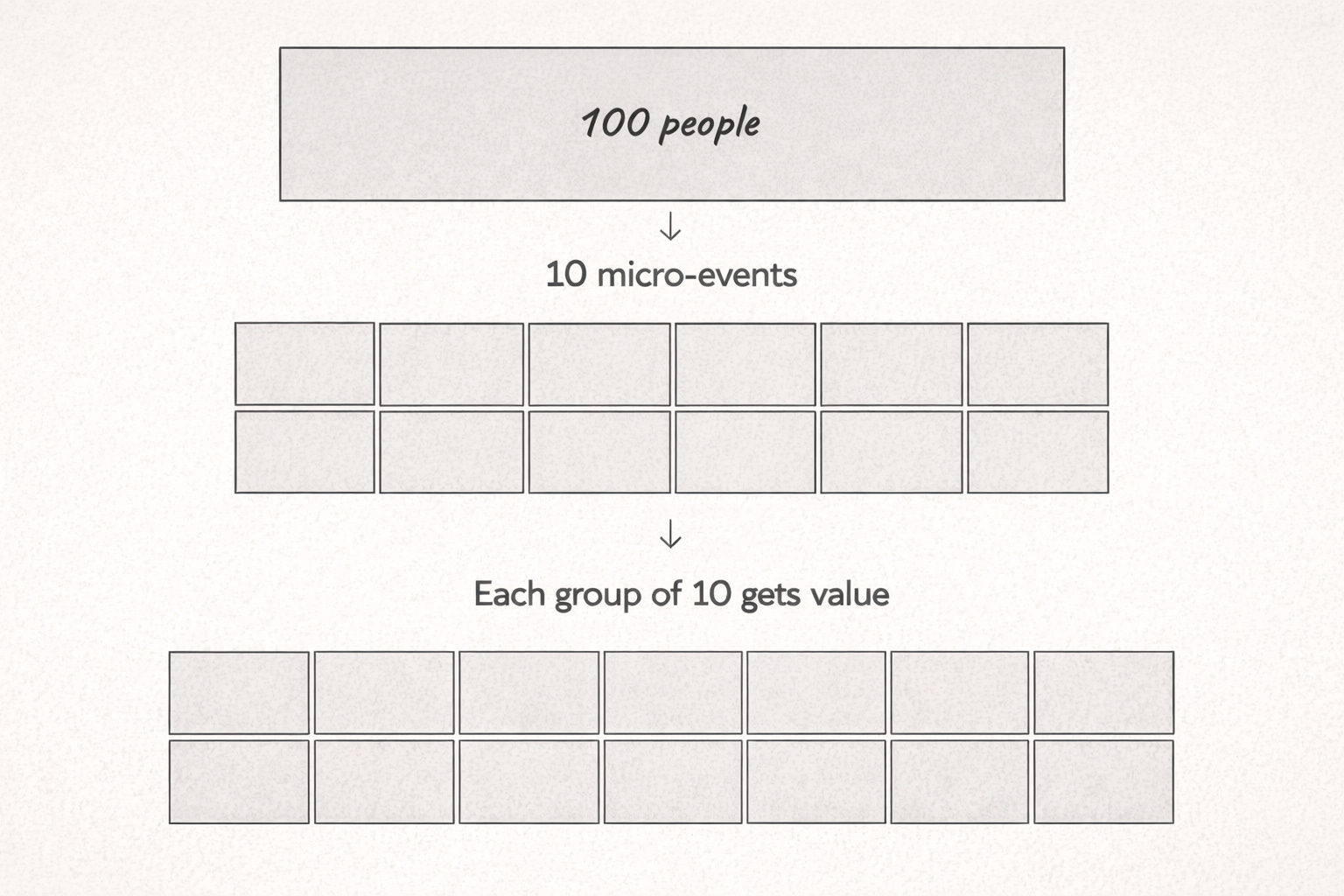
For instance, with these 100 people invited to "AI for B2B Community Builders" - that could also be 10 sub-events of 10 people with each group doing something specifically tailored towards their interest, with a group of people hyper relevant to one another, at a time and place that's most convenient for them.
This once 100 person event, could be:
- Event 1 → Experienced B2B Community Builders using AI to prove Community ROI to leadership (Tuesday 4pm).
- Event 2 → Learning the basics of content creation with AI for B2B Community Builders (Wednesday 10am).
- Event 3 → Deepening engagement in B2B community forums using AI for those already using AI tools (Thursday 7pm)
- Events 4-10 → Even further tailored towards the specific group of attendees.
The reason this hasn't been done before is because it's a much harder coordination (and facilitation) problem.
This was part of the broader vision at Intros.ai, but we honestly never got beyond the first couple of stages before being acquired.
I'm sharing this now because I really hope someone builds this. It feels like this type of community experience is finally possible, exciting, and would mean more people can find and connect with each other.
It's clear that the community industry has the strongest chance of solving the loneliness crisis, and it's important we shape technology to make it a reality.